
Autistic and neurodivergent children whose individualized needs are an appropriate fit for the program.
OUR PROGRAM · COMING SPRING 2027 · ENROLLMENT OPEN
Individualized support, explained.
Coming Spring 2027, Sensory Escape offers a center-based pediatric intervention program for autistic and neurodivergent children ages 3–6 in Canton and Stark County. The program's educational approach centers on individualized IEP goals, led by an Intervention Specialist and supported by trained Sensory Support Aides/Specialists. Sensory-informed environments, purposeful movement and family collaboration help make that instruction accessible.
This is not an open-play sensory gym, daycare or ABA program. Enrollment is open for Spring 2027. The weekday schedule and 1:4 support model are outlined below; final opening date, staff assignments and individual service arrangements are being confirmed.
PROGRAM AT A GLANCE
Start with the practical details.
Monday through Friday; program opening date and each child's placement are confirmed separately.
A target ratio of one direct-support staff member for every four children. Individual support needs are reviewed before placement.
An Intervention Specialist directs IEP-aligned instruction with support from Sensory Support Aides/Specialists.
OUR EDUCATIONAL SUPPORT MODEL
Who works on your child's IEP goals?
Our 1:4 support model means one direct-support team member for every four children. The Intervention Specialist leads IEP-aligned instruction; Sensory Support Aides/Specialists assist with implementing strategies and collecting meaningful progress information under that direction.
Intervention Specialist
Leads instruction connected to each child's applicable IEP goals; translates those goals into accessible activities, directs the educational team, reviews progress information and makes instructional adjustments within the approved plan.
Sensory Support Aides / Specialists
Provide direct support for participation, communication, transitions and goal-related practice. They follow the Intervention Specialist's instructional direction, document observable responses and report when an approach needs adjustment.
Goal-focused daily routines
IEP goals guide opportunities across purposeful play and everyday routines—not only seated lessons. For example, a communication goal may be practiced through choosing an activity, requesting help or participating in a transition.
The 1:4 figure describes the intended staffing model, not guaranteed one-to-one support or a fixed class size. The child's applicable IEP or AEP, authorized services, supervision needs and program capacity are considered before admission. IEP changes remain with the school district and IEP team.
HOW SUPPORT WORKS
Sensory-first has a practical meaning.
Rather than expecting a child to adapt to every demand of the environment, the team would consider what makes participation accessible. Sensory support is part of the approach—not a substitute for educational or developmental goals.
AREA 01
Communication and AAC
What a family may notice: A child may understand what they want but have difficulty letting others know.
What support could involve: Staff might use visual choices, gestures, picture-based communication or an established AAC system, while honoring the child's preferred way to communicate.
Why it matters: More opportunities to express needs, make choices, ask for help and connect with others.
AREA 02
Sensory regulation and transitions
What a family may notice: Arrival, noise, movement or a change of activity may make participation difficult.
What support could involve: Staff might prepare a visual transition, adjust sensory demands, offer predictable movement opportunities or support access to a quieter area.
Why it matters: Help the child access routines in a way that is safe, respectful and responsive.
AREA 03
Play, relationships and group participation
What a family may notice: Joining an activity, sharing space or engaging with peers may require additional support.
What support could involve: Adults might model play, create supported turn-taking opportunities or adapt the materials and group size to the child's needs.
Why it matters: Build participation and connection without demanding that every child interact in the same way.
AREA 04
Everyday independence
What a family may notice: Handwashing, managing belongings, requesting a break or following familiar routines may involve multiple steps.
What support could involve: The team might break tasks into accessible steps, use visual reminders and gradually adjust assistance in line with the child's goals.
Why it matters: Practice useful skills that can matter at home, in educational settings and in the community.
AREA 05
Motor development and movement
What a family may notice: Balance, coordination, body awareness and safely navigating activities may affect daily participation.
What support could involve: Movement opportunities might include climbing, floor play, pushing, pulling or supported gross-motor activities appropriate to the child's needs.
Why it matters: Use movement deliberately, with attention to access, safety, engagement and functional goals.
AREA 06
Learning through meaningful routines
What a family may notice: A child may need a different way to access language, early concepts, problem-solving or learning activities.
What support could involve: Staff might adjust instructions, use interests and play, offer hands-on practice or build learning opportunities into familiar routines.
Why it matters: Support progress toward relevant educational or developmental goals rather than a single preset lesson for every child.
These are examples of potential strategies, not a fixed curriculum, promised therapy schedule or activities assigned to every child.
INDIVIDUALIZED PLANNING
From a child's needs to useful goals.
Our individualized model uses the child's current abilities, family priorities and relevant educational or clinical information to guide support. A plan should say what staff are working toward and how progress will be recognized.
- 01
Understand the child
Learn from the family about strengths, interests, communication, sensory preferences, routines, current supports and priorities.
- 02
Review the goals and setting
The Intervention Specialist reviews relevant IEP goals and applicable educational documentation received through approved secure channels, alongside family priorities, setting and staffing needs.
- 03
Plan meaningful participation
The Intervention Specialist guides goal-aligned activities and strategies that Sensory Support Aides/Specialists can implement under appropriate direction. Equipment alone does not define the instruction.
- 04
Observe, document and adjust
Support staff document the strategy and child's observable response; the Intervention Specialist reviews progress against applicable IEP goals, directs adjustments and communicates relevant information through approved channels.
When applicable to approved scholarship services, progress reporting and IEP-related requirements must follow Ohio's rules and the child's authorized plan. Final reporting procedures will be communicated during enrollment.
SENSORY & MOVEMENT ENVIRONMENT
The activity serves a purpose.
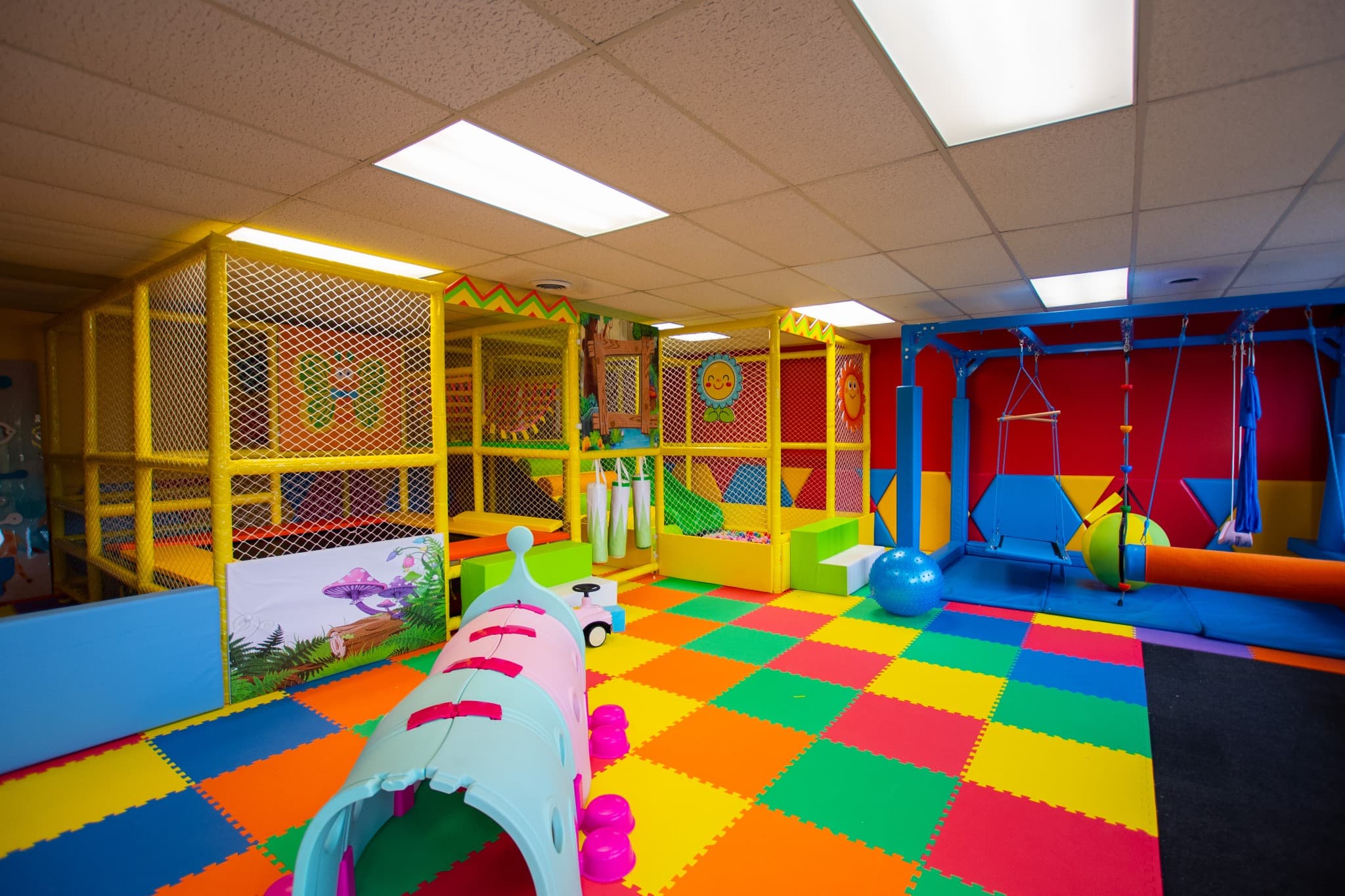
Movement may help a child prepare for an activity, practice motor skills, return to a familiar routine or communicate a need for a break. The same piece of equipment can serve different purposes for different children.
For example, a supported climbing activity might be used for motor planning and confidence, while a quieter transition space might help a child regroup before joining an activity. Equipment and strategies must be selected and supervised based on the child's goals and safety needs.
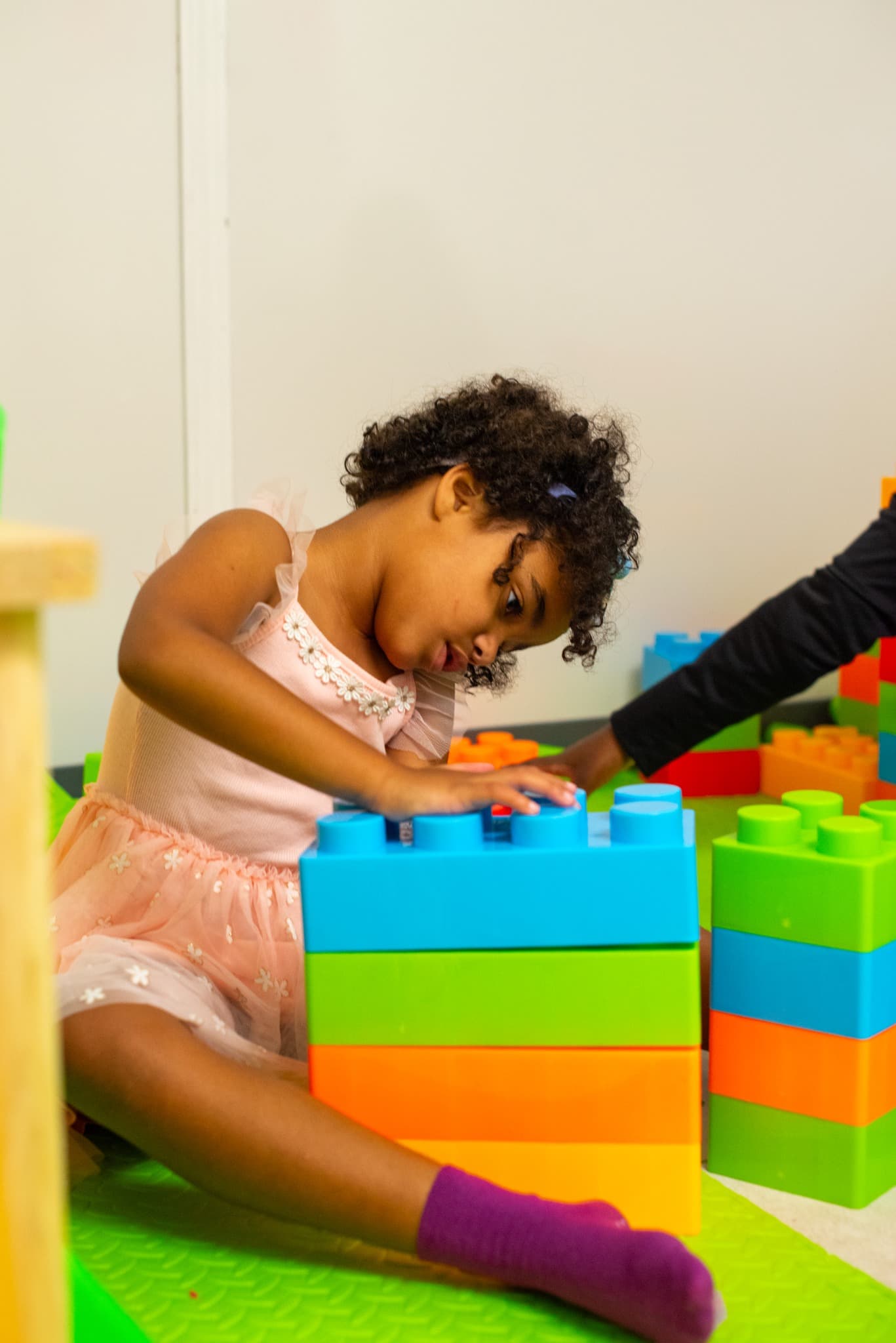
Photographs reflect Sensory Escape's previous sensory-gym environment. The final pediatric program setup and available equipment may differ.

SPECIALIZED CLINICAL SUPPORT
Where OT, speech and PT may fit.
Pediatric intervention is the proposed foundation. Occupational, speech-language and physical therapy are separate clinical services—not an automatic bundle or daily entitlement.
Occupational therapy
May address fine-motor, self-care, sensory processing or other areas of functional participation when a qualified OT determines treatment is appropriate.
Speech-language pathology
May address speech, language, AAC, functional communication or social communication when a qualified speech-language pathologist determines it is appropriate.
Physical therapy
May address mobility, balance, gross-motor development or other movement needs when a qualified physical therapist determines it is appropriate.
Clinical services depend on more than an inquiry.A child's service mix, intensity and frequency would depend on clinical need, appropriately credentialed providers, authorization, availability and agreed arrangements. Sensory Escape cannot promise all therapies will be available or covered.
WHO WE SERVE
Finding the right fit for your child.
Ages and diagnoses are starting points, not a complete placement decision. Every family should understand what the setting is designed to support, what information matters, and why a proposed placement may or may not be appropriate.
Child and family priorities
What your child enjoys, how they communicate, what participation looks like today and what you hope will become easier or more independent.
Support and safety needs
What strategies, supervision, staffing, environment and individualized safety planning may be necessary for your child to participate successfully.
Program readiness and capacity
Whether available services, qualified staff, the setting and any required authorizations can responsibly meet those needs at the time a placement is considered.
We are not advertising a continuously staffed one-to-one crisis-containment program. The team must review intensive or specialized support needs individually rather than assuming a placement or excluding a child based on a label alone.